Overview
Java moss is a pleurocarpous moss from the family Hypnaceae, native to Southeast Asia, where it grows on rocks, tree roots and riverbanks in humid, shaded habitats. For decades it was sold as Vesicularia dubyana; scientific studies later identified the common aquarium form as Taxiphyllum barbieri.
It has no true roots. Instead, it attaches to surfaces with fine rhizoids and absorbs all nutrients directly from the water through its tiny, overlapping leaves. Its irregular, branching growth makes it the most versatile texture in the hobby.
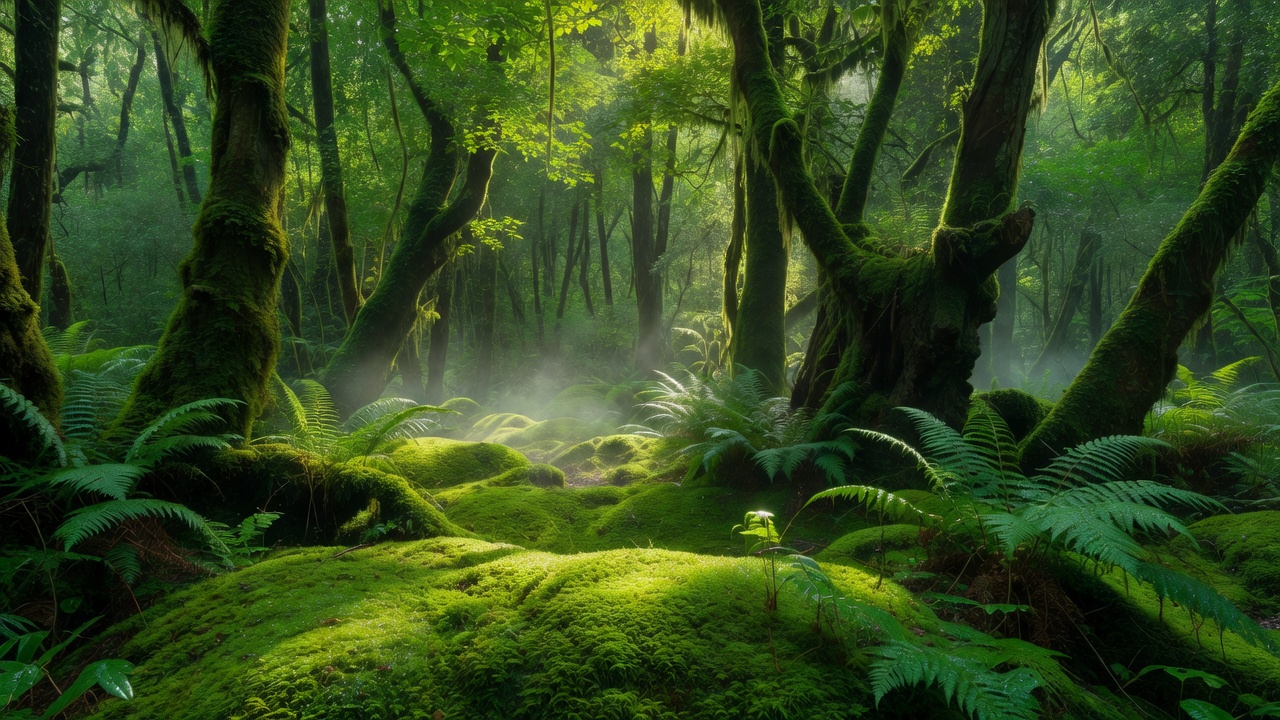
How to Attach Java Moss
- Thread or fishing line — spread a thin layer over wood or stone and wrap firmly. Cotton thread dissolves after a few weeks once the moss has attached.
- Gel superglue — dab cyanoacrylate gel onto dry hardscape, press small portions of moss on, then submerge.
- Mesh sandwich — place moss between two pieces of stainless or plastic mesh to create moss walls or carpets.
Lighting, Nutrients & CO₂
Java moss grows under almost any light, but low to medium intensity keeps it tight and green while limiting algae entanglement. Higher light and CO₂ produce faster, denser growth. A light weekly dose of liquid fertiliser is enough. It prefers cooler water, growing best below about 24 °C; at high temperatures growth slows and becomes straggly.
Trimming & Maintenance
Trim every three to six weeks with curved scissors to keep a neat shape and encourage dense branching. Siphon out the trimmings — loose fragments drift and attach elsewhere. Because moss traps detritus, gently shake it during water changes or blast it with a turkey baster and remove the debris.
Propagation
Propagation could not be simpler: any trimmed piece will grow into a new colony. Hobbyists often share or trade trimmings, and a single portion can cover several pieces of hardscape within months.
Common Problems
| Symptom | Likely cause | Solution |
|---|---|---|
| Brown, dying inner layers | Moss too thick; no light or flow inside | Thin it out and trim regularly. |
| Hair or thread algae tangled in moss | Excess light or nutrients imbalance | Reduce photoperiod, remove algae by hand, add Amano shrimp. |
| Long, sparse strands | High temperature or low light | Lower temperature slightly, increase light modestly, trim. |
| Moss covered in debris | Low flow and heavy feeding | Improve circulation and clean during water changes. |
Fish & Shrimp Compatibility
No plant is better for shrimp. Its fine structure collects biofilm and microorganisms that cherry, crystal and Amano shrimp graze constantly, and it shelters newborn shrimplets. Killifish, danios, barbs and other egg-scatterers use it as a natural spawning mop, and fry hide in its depths. Goldfish and some large cichlids may eat or tear it.
Moss Alternatives
- Christmas moss (Vesicularia montagnei) — triangular, tiered fronds; neater but slower.
- Flame moss (Taxiphyllum ‘Flame’) — grows upward in twisting flames.
- Weeping moss (Vesicularia ferriei) — drooping growth ideal for “trees”.
Pros & Cons
Pros
- The ultimate shrimp and fry plant
- Grows on any surface
- Tolerates cool and unheated tanks
- Free propagation from trimmings
- Endless aquascaping uses
Cons
- Traps detritus and algae
- Needs regular trimming
- Fragments spread around the tank
- Gets straggly in warm water
Buying Tips & Typical Pricing
Buy tissue-culture moss or moss from trusted sellers to avoid hitchhiking hair algae. Rinse new portions and inspect for snails and algae strands before adding them to your tank.
| Format | Typical retail price (approx.) | Best for |
|---|---|---|
| Loose portion | $6–12 / £5–9 | Covering wood or stone |
| Tissue-culture cup | $8–12 / £6–10 | Algae-free start |
| Moss mat or moss on stone | $15–25 / £12–20 | Instant carpet or wall |
Further Reading
See how moss is used for trees and forest floors in our aquascaping styles guide.