Overview
Java fern is a true fern native to Southeast Asia, including Thailand, Malaysia, Indonesia and the Philippines. In the wild it grows along streams and waterfalls, clinging to rocks and tree roots and spending part of the year above water. That amphibious lifestyle explains its legendary toughness: it copes with fluctuating temperatures, varying water hardness and long periods of low light.
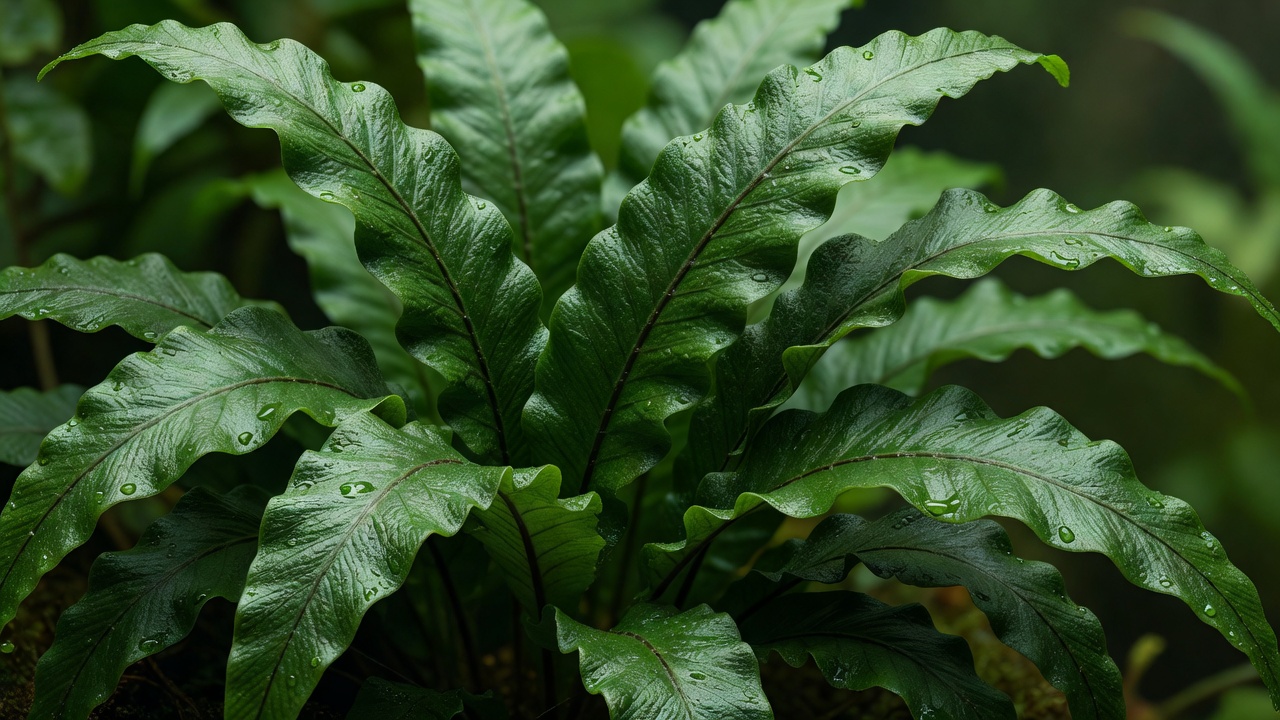
The plant grows from a creeping horizontal stem called a rhizome. Dark, wiry roots anchor it to hard surfaces, and lance-shaped, leathery leaves rise from the rhizome. Those leaves contain compounds that most fish find unpalatable, so Java fern is one of very few plants that can survive alongside goldfish, large cichlids and silver dollars.
How to Plant Java Fern
The most important rule: do not bury the rhizome. Covered in gravel or sand, it suffocates and rots within weeks. Instead, attach the plant to hardscape:
- Remove the plant from its pot and gently pick away all rock wool.
- Choose a spot on driftwood or a porous stone such as lava rock.
- Secure the rhizome with cotton thread, fishing line or a few drops of cyanoacrylate gel superglue (aquarium-safe once cured).
- Within four to eight weeks the roots grip the surface and the thread can be removed.
Lighting, Nutrients & CO₂
Java fern thrives under low to medium light. Strong light offers little benefit and can cause leaves to turn translucent or brown and encourage algae on the slow-growing fronds. Because the plant takes nutrients through its leaves from the water column, an all-in-one liquid fertiliser once a week is more useful than root tabs. CO₂ injection is unnecessary, although it modestly speeds growth.
Growth, Maintenance & Propagation
Expect one or two new leaves per month. Trim old or damaged leaves at the base with sharp scissors. Java fern reproduces in two ways:
- Adventitious plantlets — tiny new plants form on the leaf tips and edges. Once they have a few leaves and roots, pull them off and attach them elsewhere.
- Rhizome division — cut the rhizome with a clean blade, leaving at least three to five leaves on each section.
The dark brown dots arranged in rows under mature leaves are sori (spore clusters), not disease. They are a sign of a healthy, mature plant.
Common Problems
| Symptom | Likely cause | Solution |
|---|---|---|
| Rhizome turns soft and black | Buried in substrate | Cut away rotten parts and reattach to wood or rock. |
| Brown, translucent patches spreading | Nutrient deficiency, often nitrate or potassium; or excessive light | Dose a complete fertiliser, reduce light intensity, remove affected leaves. |
| Black fuzzy growth on edges | Black beard algae from unstable CO₂ or high organics | Increase water changes, spot-treat with liquid carbon, trim affected leaves. |
| Dark dots in neat rows under leaves | Spore clusters (sori) | Normal — no action needed. |
Fish & Shrimp Compatibility
Java fern is an excellent choice for nearly every freshwater community. Goldfish, African and South American cichlids, silver dollars and plecos generally leave it alone. Cherry shrimp and Amano shrimp graze the biofilm on the leaves without damaging them, and the dense rhizome network shelters fry and small fish. Note that very large goldfish may occasionally tear soft new leaves.
Popular Varieties
- Standard — broad, lance-shaped leaves up to 30 cm.
- Narrow Leaf — slender, elegant fronds that create a grassy, flowing effect.
- Windelov (‘Lace’) — forked, finely branched tips; a favourite for aquascapes.
- Trident — deeply lobed, three-to-five-pointed leaves with a delicate look.
- Needle Leaf — very thin leaves, compact form suited to smaller tanks.
Pros & Cons
Pros
- Nearly impossible to kill
- No substrate or CO₂ required
- Ignored by most herbivorous fish
- Easy to propagate for free
- Wide temperature and pH tolerance
Cons
- Slow growth limits algae competition
- Rhizome rots if buried
- Large varieties overwhelm nano tanks
- Can develop brown patches if underfed
Buying Tips & Typical Pricing
Look for firm green rhizomes and leaves free of holes, algae and translucent patches. Tissue-culture cups are pest- and snail-free and ideal for shrimp tanks.
| Format | Typical retail price (approx.) | Best for |
|---|---|---|
| Potted plant | $6–12 / £5–9 | Most tanks |
| Tissue-culture cup | $8–12 / £6–10 | Shrimp tanks, pest-free start |
| Mature plant on driftwood | $20–40 / £15–30 | Instant mature look |
Further Reading
Learn how to combine Java fern with other species in our first planted aquarium guide, or see why it is a staple of jungle and nature layouts in aquascaping styles.